Brass Metals – History, Uses, Properties and Benefits
Updated: 25 Oct 2024
279
Brass Imagine holding a shiny, golden trumpet that can create the most beautiful music. Or think about the cool doorknobs and faucets in your home that sparkle when the sun hits them just right.
This magical metal called brass makes all of that possible! It’s not just a metal; it’s a special mixture of copper and zinc that has been used for thousands of years. Let’s dive into the exciting world of brass and discover why it’s so important and cool.
What is Brass?
Brass is a special type of metal made by mixing two other metals: copper and zinc. This mixture creates a strong, shiny material with a yellowish color, making it look like gold. Brass has been around for thousands of years and is still important today.
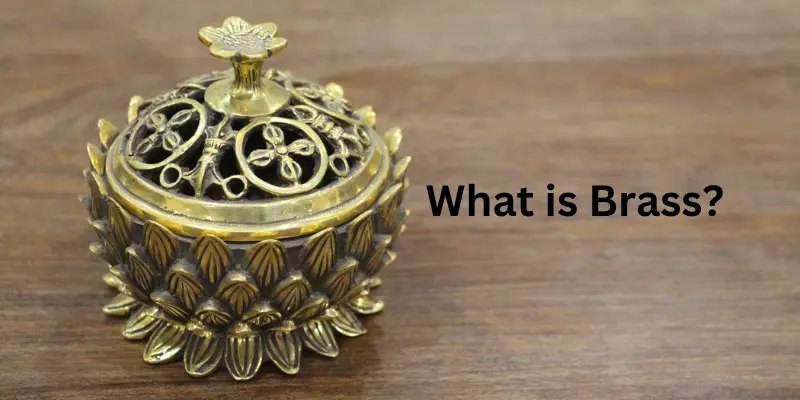
It’s used to make things like musical instruments, decorations, and even the faucets in your bathroom. Because it’s easy to shape and doesn’t rust easily, brass is one of the most useful metals we have.
You May Also Visit It!
Spray Arc Welding – Step by Step Guide – Need Metals
Pre Coat Metal | Define Complete Guide- Need Metals
Mcelroy Metals – Types, Uses And Properties – Need Metals
Will Magnets Stick to Stainless Steel Refrigerator – Complete Guide
History of Brass Metal
Brass is a shiny yellow metal that has been used by humans for thousands of years. It is made by mixing two metals copper and zinc. This mix makes brass stronger and gives it its bright color.
The first use of brass was a long time ago, even before people knew much about metals. Historians think brass was made by accident when ancient people melted copper with rocks that had zinc in them.
Around 3,000 years ago, in places like India and the Middle East, people started using brass to make tools, jewelry, and coins. They liked brass because it didn’t rust and was easy to shape.
Later, in Roman times, brass became very popular. The Romans used it for making helmets, decorations, and even musical instruments. They discovered that brass could be polished to look like gold, which made it perfect for fancy objects.
Today, brass is still an important metal. It’s used for making musical instruments, doorknobs, and many other things. The history of brass shows how creative humans have been in using metals to make their lives better.
Why Brass is the Superhero Metal of Our Everyday Lives!
- Brass Saves the Day
- Have you ever thought about the metal that makes your faucets shiny, your keys strong, or your trumpet sound amazing? That’s brass! This superhero metal is strong, shiny, and super useful in so many ways. It’s made from a mix of copper and zinc, which gives it special powers.
- Why Is Brass So Important?
- Brass is everywhere! It’s used in musical instruments, door handles, coins, and even in science labs. Its golden color makes it look great, and it’s also very strong and resistant to rust. Because of that, it lasts a long time, helping us in our daily lives without us even realizing it. Without brass, many everyday items wouldn’t be as reliable or beautiful!
How is Brass Made?
Brass is made by combining two metals: copper and zinc. The process involves several key steps to ensure the right mixture and quality. Here’s a simplified breakdown:
- Mixing Copper and Zinc
- The process begins by melting copper in a furnace. Once the copper turns liquid, zinc is added to the mix.
- Different ratios of copper and zinc are used to create various types of brass (e.g., yellow brass has more zinc).
- Melting
- The metals are heated to very high temperatures, around 900-940°C. At this point, both copper and zinc melt and form a uniform liquid alloy.
- Casting
- Once fully melted, the liquid brass is poured into molds or allowed to cool in large blocks known as ingots. These ingots are then shaped into different forms depending on the intended use.
- Shaping and Forming
- After cooling, the brass ingots are rolled or pressed into sheets, rods, or other shapes. This step makes it easier to manufacture brass items like coins, musical instruments, or screws.
- Finishing
- To make the brass smooth and shiny, it goes through finishing processes like polishing or buffing. Sometimes, chemicals are used to give brass specific colors or coatings to make it more durable.
Types of Brass
Brass comes in various types, each with different properties based on the amount of copper and zinc in them. Here are the main types:
- Yellow Brass
- Composition: 60-70% copper, 30-40% zinc.
- Uses: Often used for musical instruments, plumbing, and decorative items due to its golden color.
- Red Brass
- Composition: 85% copper, 15% zinc.
- Uses: Popular for valves, plumbing pipes, and electrical hardware.
- Alpha Brass
- Composition: High copper content (more than 65%).
- Uses: Good for cold working and corrosion-resistant applications, like screws and locks.
- Alpha-Beta (Duplex) Brass
- Composition: 55-65% copper and the rest zinc.
- Uses: Ideal for hot working and casting. Found in valves and marine components.
- Leaded Brass
- Composition: Includes a small percentage of lead (around 2-3%).
- Uses: Common in machining processes and plumbing fittings for its ease in cutting.
- Naval Brass
- Composition: About 60% copper, 39% zinc, and 1% tin.
- Uses: Marine applications, like ship parts, because of its corrosion resistance in saltwater.
- High Brass
- Composition: 65% copper, 35% zinc.
- Uses: Great for springs, fasteners, and industrial applications requiring high strength.
Each type of brass has unique characteristics suited for specific tasks, making it a versatile material across industries.
Uses of Brass Metal
Brass is used in various fields due to its unique combination of strength, corrosion resistance, and workability. Here are the main areas where brass plays a crucial role:
- Musical Instruments
- Decorative Items
- Plumbing and Piping
- Electrical Components
- Machinery Parts
- Marine Applications
- Coins and Medals
- Art and Jewelry
- Automotive and Aerospace
- Fasteners and Screws
By understanding these uses, we can see why brass remains such a versatile and important material in many industries.
You May Also Visit It!
Forging Process | Metal Becomes Tools and Parts – Easy Explanation
History of Nickel | From Ancient Coins to Modern Technology
Metal Does a Magnet Not Stick To | Uses and Types
Physical Properties Are Shared by Most Metals
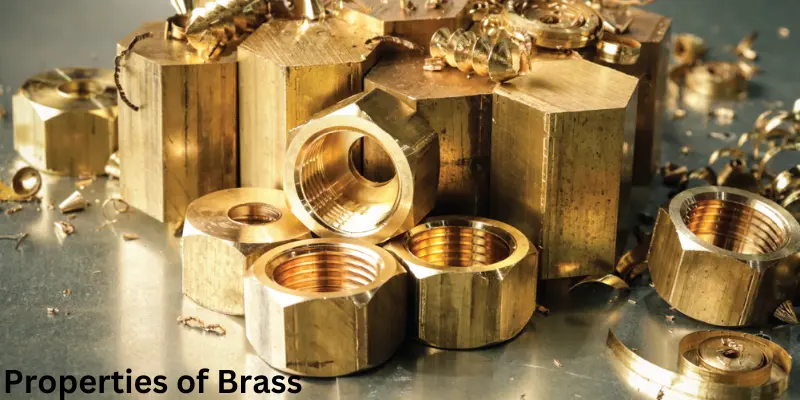
Properties of Brass
Brass is a unique alloy with several important properties that make it a popular choice in many applications. Here’s a detailed look at its key characteristics:
- Corrosion Resistance
- Brass is highly resistant to rust and corrosion, especially when compared to iron or steel. This property makes it ideal for use in plumbing and marine environments.
- Malleability and Ductility
- Brass can be easily shaped and formed without breaking. This malleability allows it to be crafted into complex designs, making it suitable for musical instruments and decorative items.
- Strength
- While not as strong as steel, brass is durable enough for various structural applications. It maintains its strength in high-stress situations, which is beneficial for mechanical components.
- Good Electrical Conductivity
- Brass conducts electricity well, making it useful for electrical fittings and connectors. It provides a reliable connection in many electronic devices.
- Low Friction
- The smooth surface of brass reduces friction, which is advantageous in applications like gears and bearings. This property helps in extending the lifespan of mechanical parts.
- Acoustic Properties
- Brass has excellent acoustic qualities, which is why it is commonly used in musical instruments. It produces a warm, rich sound that is sought after in brass instruments like trumpets and trombones.
- Aesthetic Appeal
- Brass has a bright, attractive golden color that can enhance the appearance of products. Its beauty makes it a popular choice for decorative elements in homes and buildings.
- Workability
- Brass is easy to machine and can be easily cut, drilled, and shaped into various forms. This property is especially useful in manufacturing processes.
These properties make brass a versatile material used in countless applications, from everyday items to specialized industrial components.
Advantages and Disadvantages of Brass Metals
Brass is a shiny metal made by mixing copper and zinc. It has some great benefits, like being strong and pretty, but it also has a few downsides, like getting scratched easily.
Benefit of Brass Metals
Brass is a shiny metal that is strong, easy to shape, and doesn’t rust, making it great for things like tools, decorations, and musical instruments.
| Pros |
|---|
|
Drawback of Brass
Brass metals have some downsides, like being soft, which means they can get scratches and dents easily
| Cons |
|---|
|
Advantages and Disadvantages helps in selecting the right material for various applications!
Conclusion
Brass is a remarkable alloy that combines beauty and functionality. Its unique properties, such as corrosion resistance, malleability, and excellent conductivity, make it an essential material in various applications, from musical instruments to plumbing fixtures.
While it has some drawbacks, including cost and weight, the advantages often outweigh them. Understanding brass helps us appreciate its role in our everyday lives, and it continues to be a vital part of both art and industry. Whether in our homes or in musical performances, brass truly shines!
Bonus Points
- Historical Significance: Brass has been used for thousands of years, dating back to ancient civilizations. It was even used in coins and jewelry!
- Eco-Friendly: Brass can be recycled repeatedly without losing its properties, making it an environmentally friendly choice.
- Mythical Associations: In many cultures, brass is linked to protection and prosperity, often used in talismans.
- Color Variety: Brass can come in different shades, from bright yellow to deep reddish tones, depending on its composition.
- Future Innovations: With advancements in technology, new brass alloys are being developed for even better performance in modern applications!
You May Also Visit It!
Magnetic Materials | What Materials Are Attracted By Magnets – Benefits
Yield Strength of Metals: Types, Uses and Clear and Simple Overview
Heat Treating Steel | Key Temperatures for Hardening, Types and Uses
1075 or 1095 Steel | Find the Best Steel for Your Knife
Aluminium Metal, Types, Uses, Properties and Rust Aluminium
Please Write Your Comments